Turning carbon emissions into renewable methanol
CRI’s proprietary ETL Technology® converts captured carbon dioxide and hydrogen into renewable methanol — a versatile fuel and chemical building block used worldwide.
By transforming emissions into a usable product, ETL helps industries reduce their carbon footprint while creating new value from existing resources.


What is ETL Technology?
Emissions-to-Liquid (ETL) is a process that converts carbon dioxide emissions into renewable methanol.
Instead of releasing CO₂ into the atmosphere, the gas is captured and combined with hydrogen in a catalytic process to produce methanol — a liquid fuel and chemical feedstock used across multiple industries.
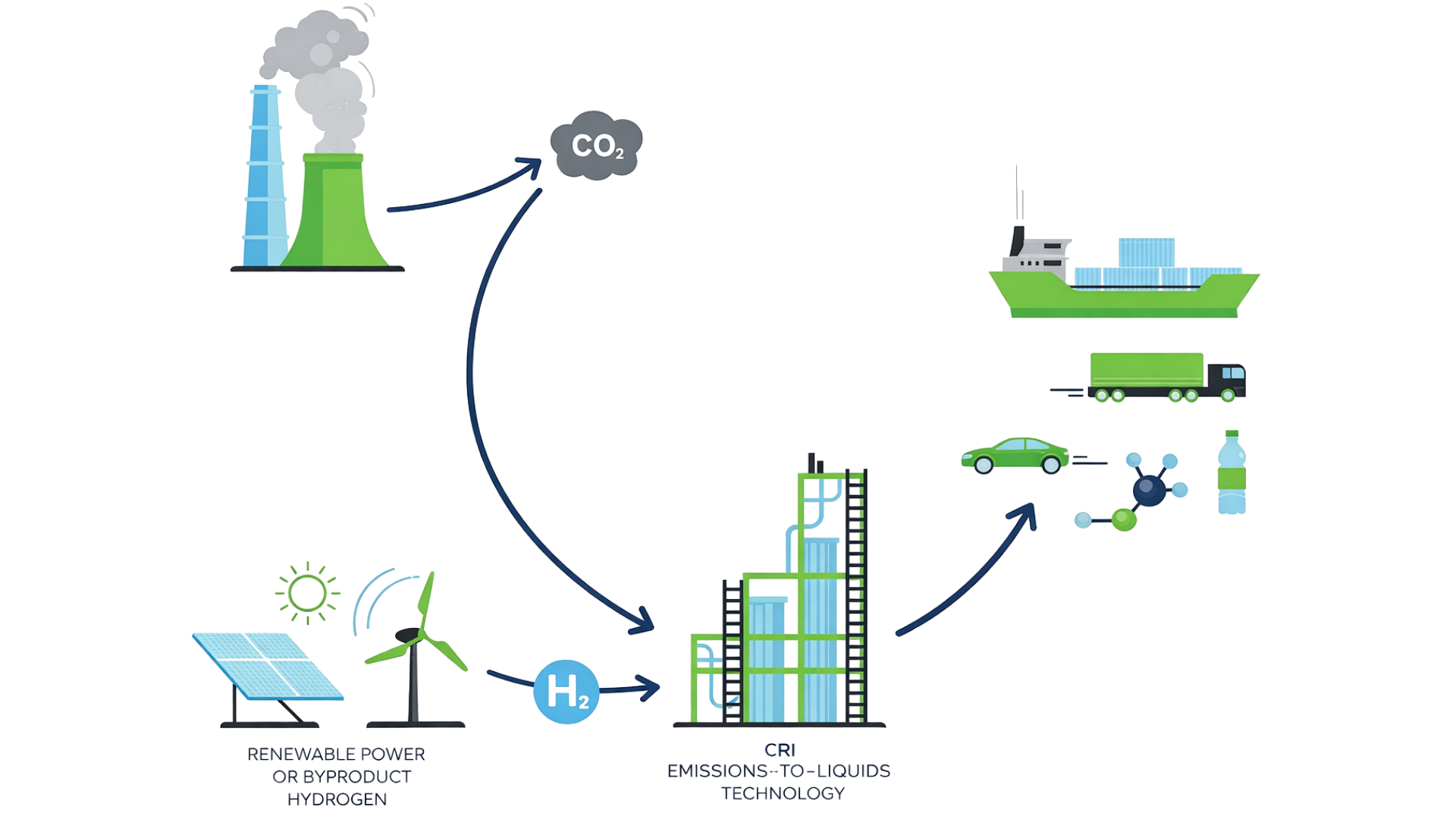
Methanol produced through this process can replace fossil-based alternatives in fuels, shipping, chemicals and industrial applications.
The result is a practical way to recycle carbon emissions into a valuable product.
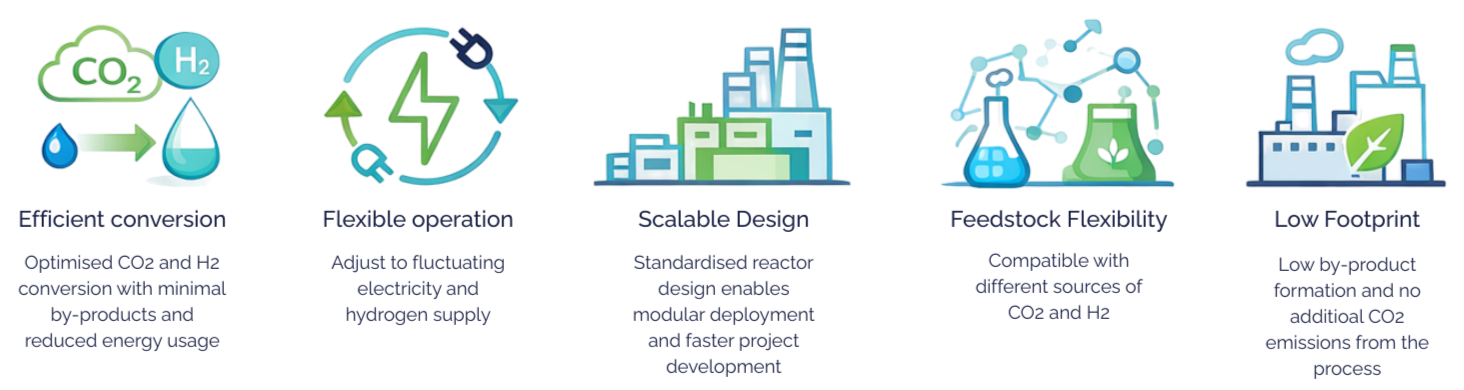
Key Advantages of CRI’s ETL Technology

Why Methanol
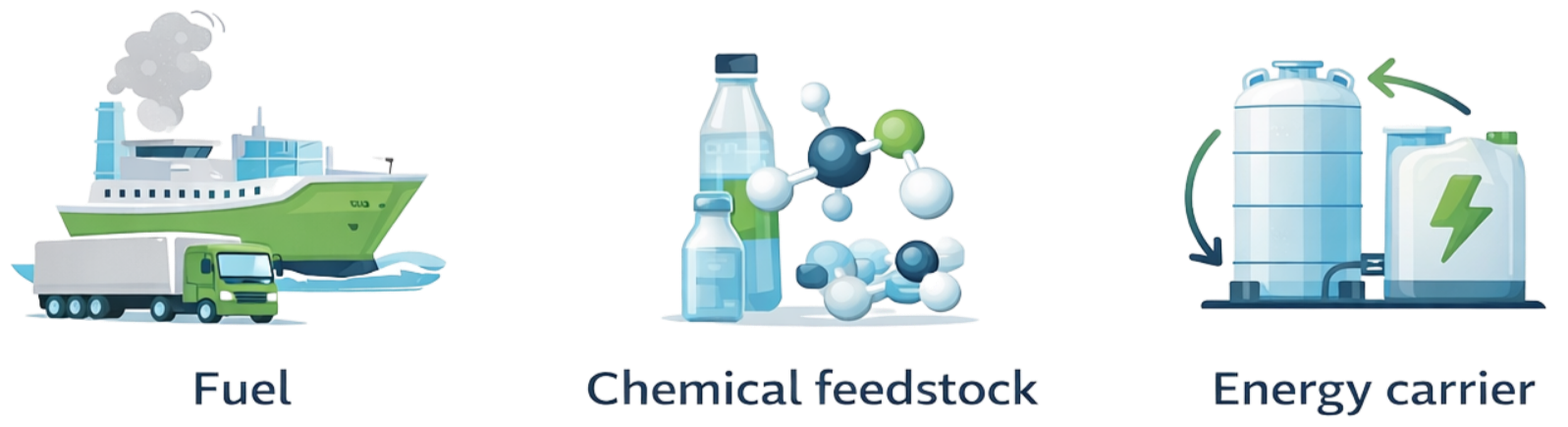
Methanol is a versatile molecule that can serve as a fuel, a chemical feedstock, and a liquid energy carrier.
One of the most widely used chemical products globally, methanol plays an important role in energy and industrial systems. As a liquid, it can be stored and transported more easily than alternative options, making it practical for global supply chains and existing infrastructure
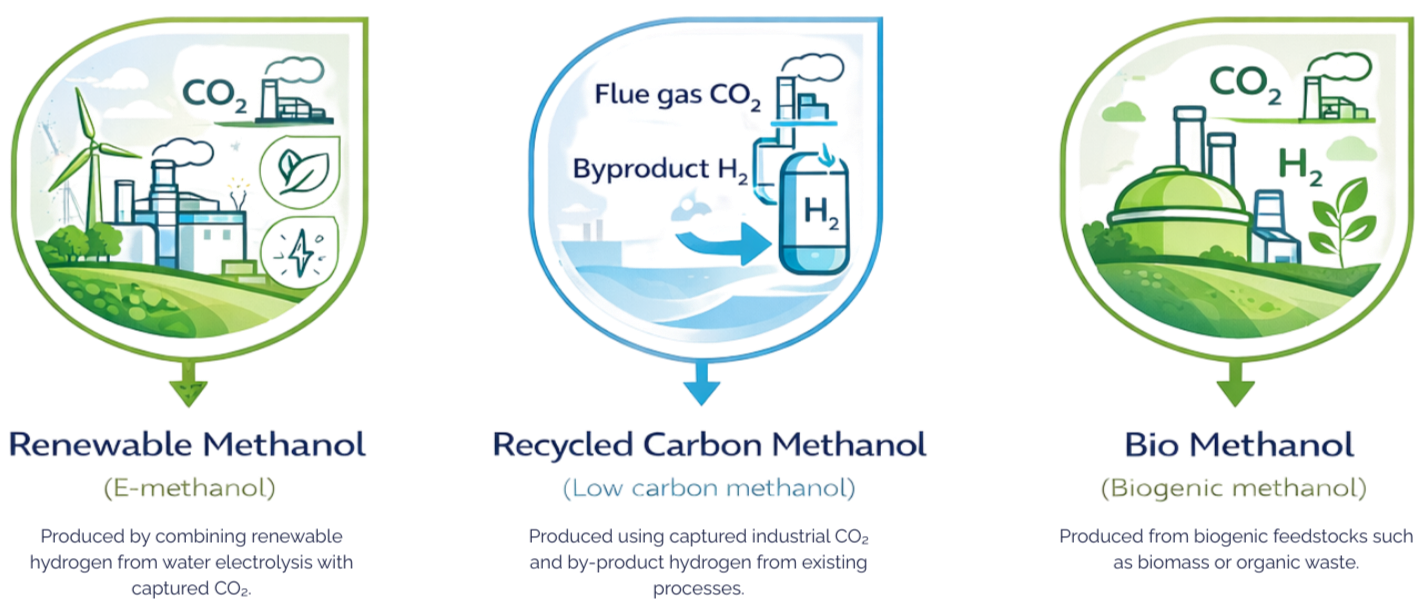
Three Types of Low-Carbon Methanol
All types of methanol are chemically identical, but the feedstocks, energy sources and production pathways differ, influencing the overall carbon footprint.
CRI Plant Project and Service Portfolio
-
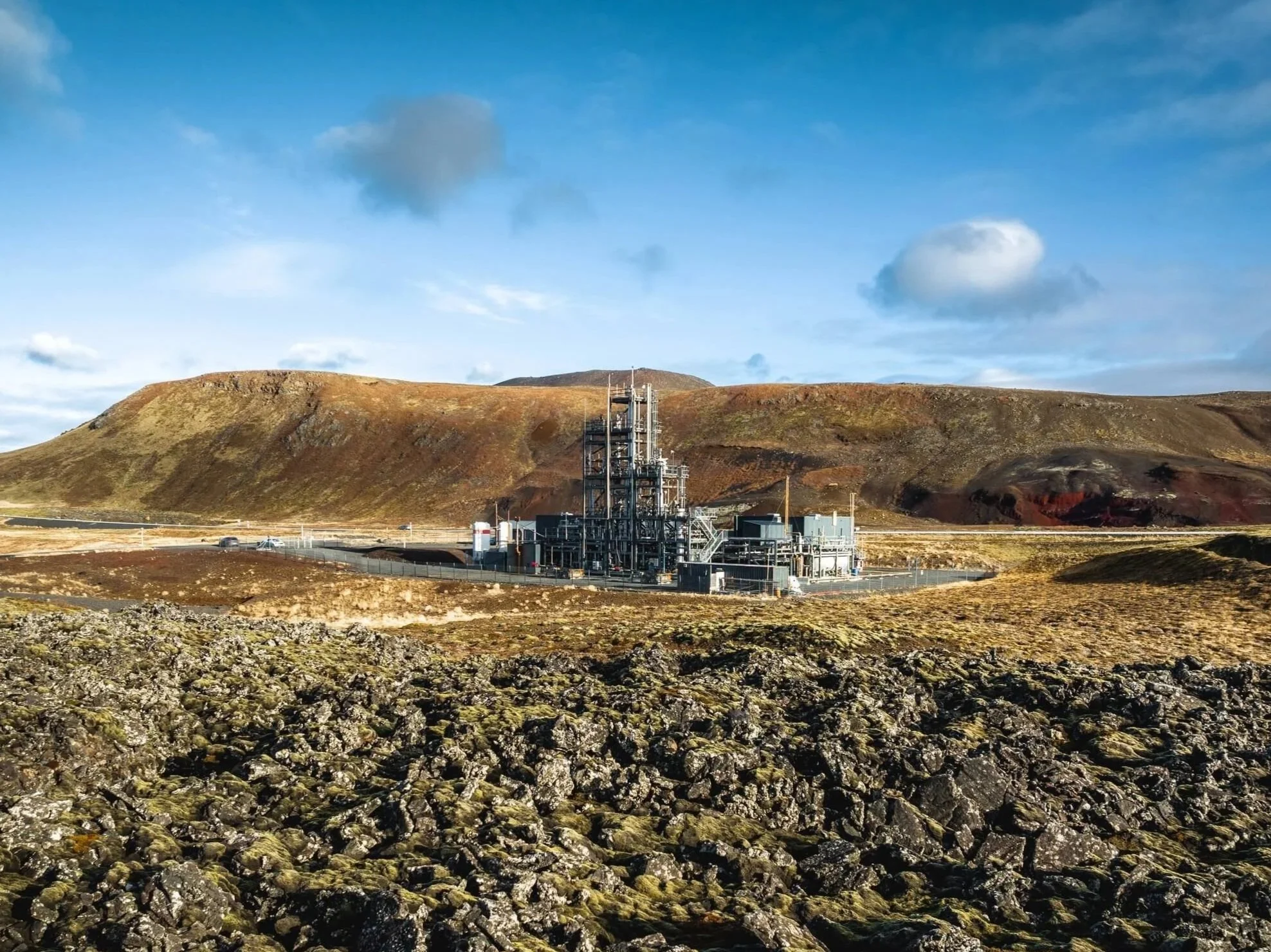
![George Olah (GO PLANT) Iceland, Reykjanes Peninsula, Svartsengi.]()
George Olah
The world’s first commercial plant producing renewable methanol from captured CO₂ and renewable hydrogen.
CRI’s Services
Feedstock appraisal and conceptual engineering.
Proprietary technology, development and testing.
Project management, own and operated, first certified e-methanol.
Operation, maintenance and sales of e-methanol.. -
![]()
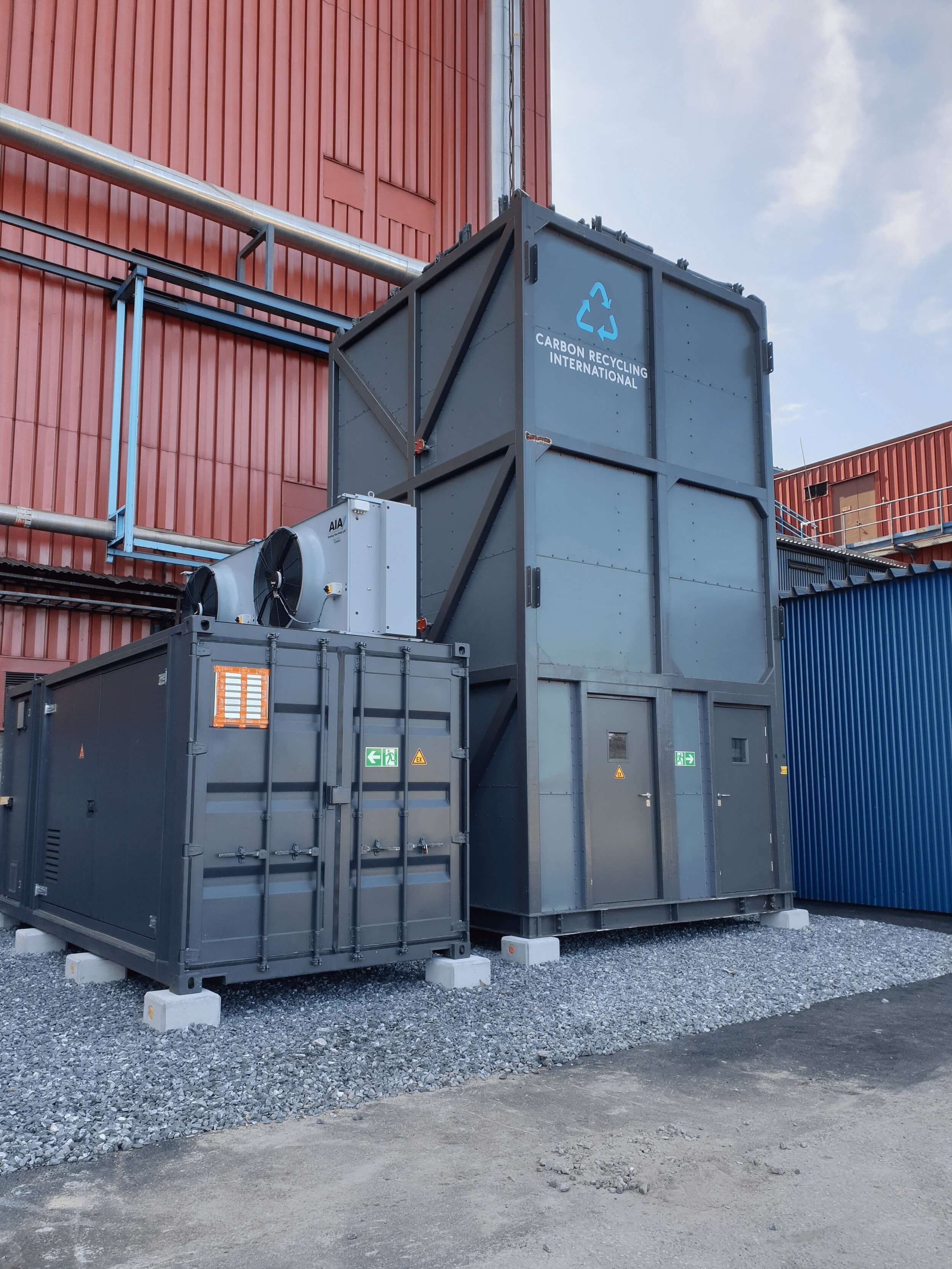
MefCO2
More
Industrial demonstration converting captured CO₂ from steel production into methanol.CRI’s Scope
-
![FResME]()
FresME
More
EU demonstration project exploring the production of renewable methanol for maritime transport.CRI’s Scope
-
![]()
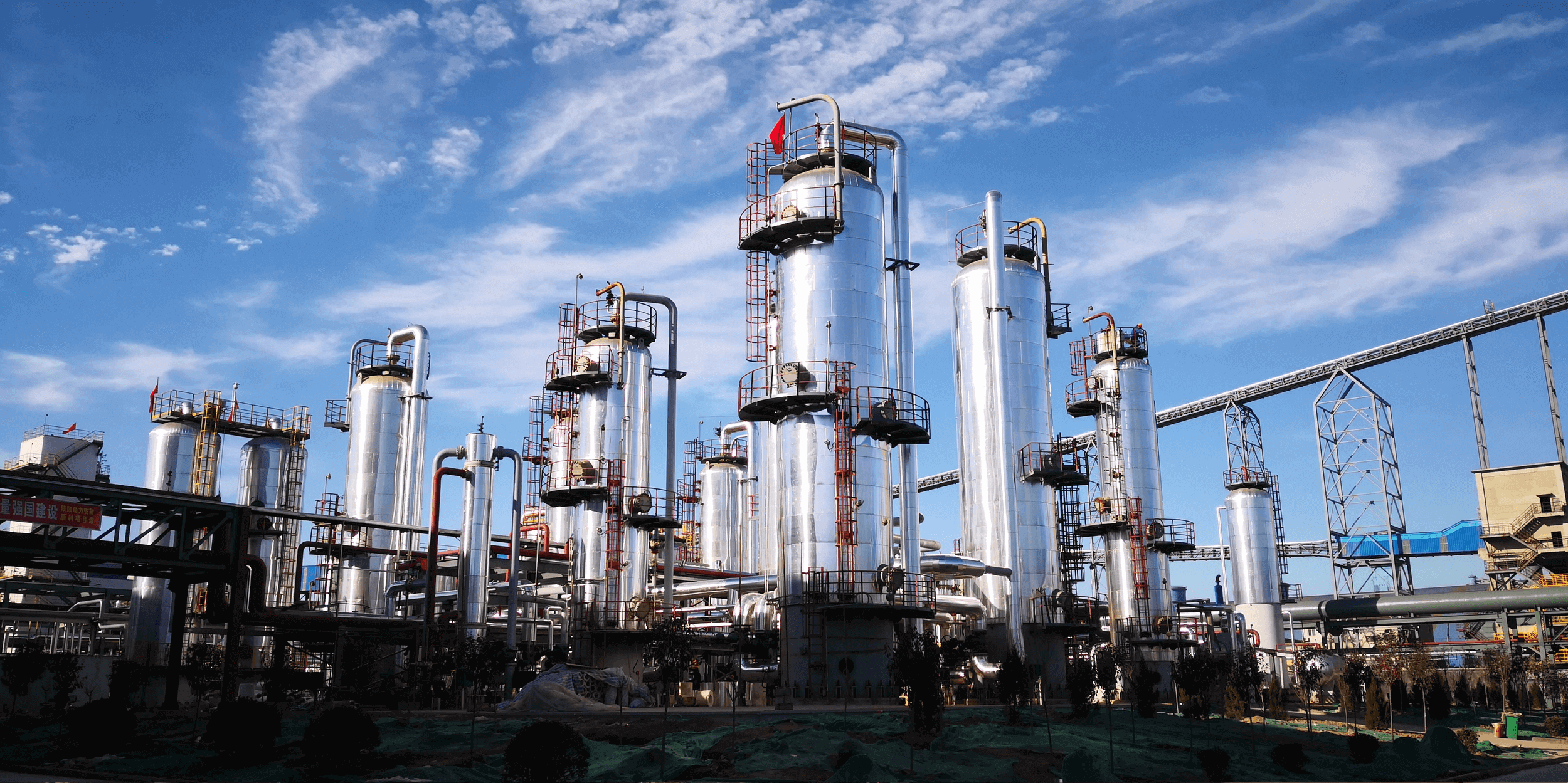
Shunli
Large-scale deployment of CRI’s ETL technology, demonstrating industrial production of low-carbon methanol.
CRI’s Services
Feedstock appraisal and conceptual engineering.
Proprietary ETL technology, equipment and Process design package (PDP).
Detailed design review, Catalyst loading and plant commissioning support. -
![]()
Sailboat
Commercial project deploying CRI’s technology to convert captured CO₂ into renewable methanol.
CRI’s Services
Proprietary ETL technology, equipment and process design package (PDP).Catalyst loading and plant commissioning support.
-
![]()
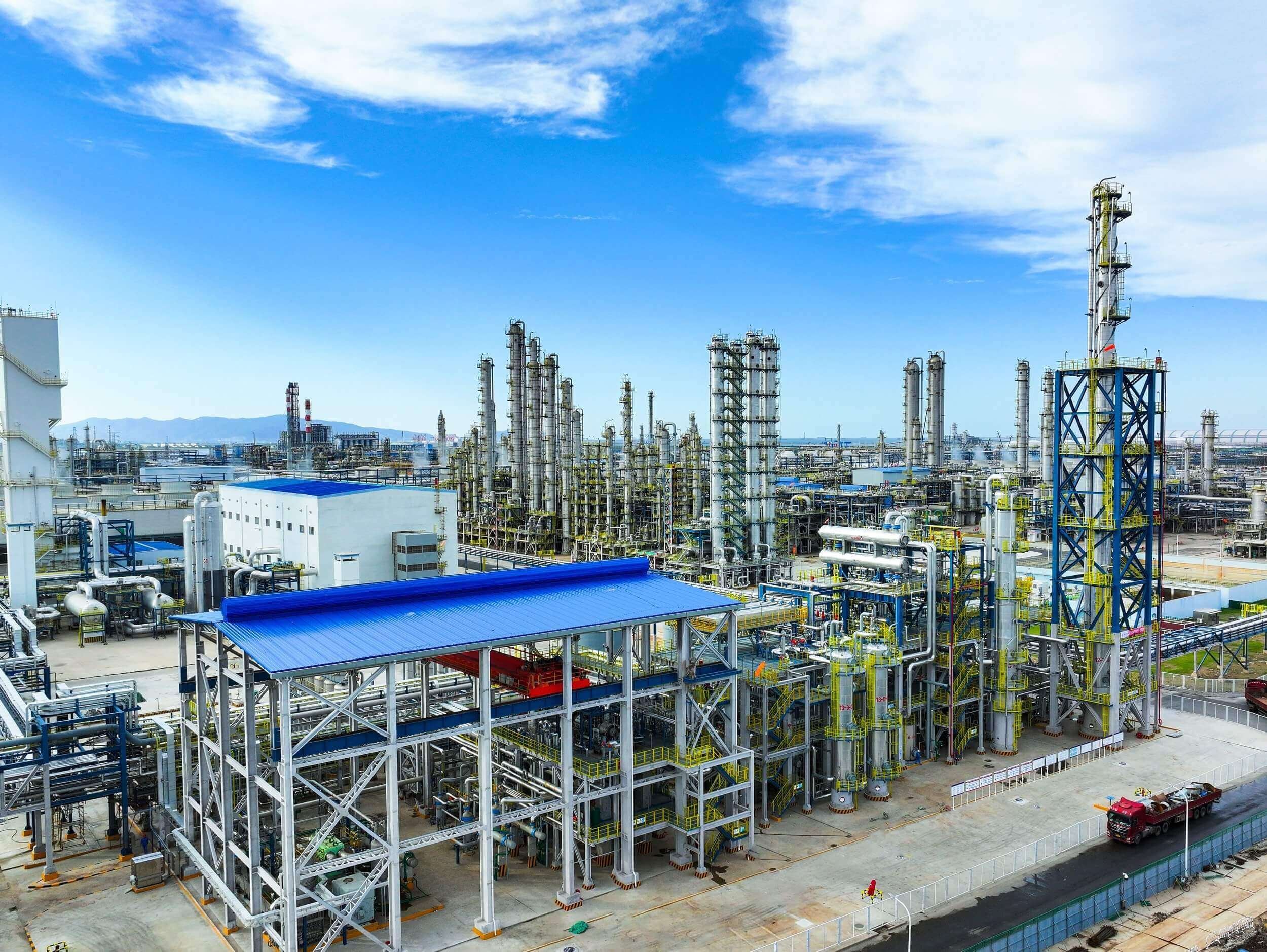
Tianying
Expected to become the world’s largest CO₂-to-methanol plant once operational, producing e-methanol at industrial scale.
CRI’s Services